Thursday, July 15, 2010

I love when it gets good like this...

From remicalbingham.blogspot.com

The summer is well underway and so is all the writing angst/excitement/frustration/pleasure that comes with it. I've begun reading some fantastic books and 'filling the well' always feeds my own work.
Writing is often the most difficult task, actually getting to the page and staying there until some spark pushes you to fill the waiting space. With new family obligations and more demands on my time, I've been finding it especially tough to find that quiet resonance I need to make sense of things I don't understand. I've been flirting with so many themes ideas, some of which have been:
The list goes on and on. The problem is finding a way to settle on one or two (or, really, three) and writing my way into them. I usually start with one poem and that poem grows into sections or a sequence, then that sequence grows into a group of poems connected by theme, then that group flourishes to become part of a larger body of work (Chapbook? Manuscript? Does it matter as long as the work is coming???)

Over the last few days, though, (after a bit of a self-pitying slump about inspiration/ambition and everything else writers find to complain about) I've hit a nice groove. I decided to stop agonizing over a manuscript I've been working to death and seeking publication for and start looking at the work I've completed outside of the manuscript over the past few years. Just as an exercise and as a way of reminding myself that the work is coming and will (try as I might to stifle it) continue to come, I went to the computer and printed out every new usable poem I'd written and hadn't included in any larger body of work. To my surprise, by the end of the day, I'd "discovered" at least one hundred poems and even started piecing together another manuscript (or two). All this tangible work sitting in my hands gave me some hope. This morning, I woke up exciting about researching, discovering, putting together pieces of new puzzles and heading back to the page, which is all I could ever really ask for.

I'm sure most writers would attest to that fact that living this writing life is mostly about resolve. The rejections arrive but as long as the writing continues, there's a reason to keep going. This--this questioning, this need to make sense of the havoc around us each day--is what you do; it's how you live.

Tuesday, June 1, 2010

Back on the Block: Summer Reading List

from remicalbingham.blogspot.com


So, I took a few months off to teach some grad workshops and get married (see the hubby and I trying to dash away in the photo by Rachel Eliza Griffiths above...) but now the summer's looming and I'm ready to dive headfirst back into all things literary. Here are the books I'll be exploring in the months to come:


The Shadow of Sirius by W.S. Merwin (Click the link to hear a great NPR broadcast with Merwin.)


The Washingtons of Wessyngton Plantation by John F. Baker Jr. (Recommended by a student! -- I'm just excited to know they're still reading after the semester has ended!)


Amorous Shepherd by Dante Micheaux (As an added bonus: Here's the link to Dante's fabulous poem and photo at the Poetry Society of America --not to mention the others featured in the Cave Canem/Ars Poetica project.)


So, what's on your summer reading list??? Any good suggestions?

Wednesday, February 3, 2010

Work in the World...

Lots of good things happening in my writing life and I figure it's time for me to do some self-promotion, mostly because I'm so grateful for all the interest in poetry that keeps returning...


Podcast on Phillis Remastered:


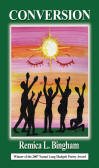
The ever-sassy Honoree Fanonne Jeffers has a series called "You Gotta Read This" on her blog and she invited me to take part in the program. She also convinced the wonderful Rachel Eliza Griffiths to slip her the photo up above. We talked about Conversion, spirituality as well as my journey as a writer and generally just had a good 'ole time :-) Feel free to listen here or you can subscribe to the Phillis Remastered podcasts on Itunes!


Scholarship Speech at Old Dominion University:

I began teaching a poetry workshop at my alma mater, ODU, this term and was asked to also venture back to speak at their annual scholarship luncheon. The speech is about the fact that all good things find their way back to us in time. You can watch it below:


Black Nature Anthology:

Hard-working poet and editor, Camille Dungy, has helped birth another beautiful anthology that was released in December. Black Nature spans four centuries of writing and includes work from heavyweights and newcomers alike. In celebration of the anthology, I'll be on a panel with Camille Dungy and contributors E. Ethelbert Miller, Greg Pardlo, Thomas Sayers Ellis and Mark McMorris at the Split This Rock Poetry Festival in Washington, DC next month. Click here to get more details on the anthology and don't miss Split This Rock!


100 Best African-American Poems Anthology:


I am honored to have been selected to have work in Nikki Giovanni's newest editing endeavor. The anthology is being published this spring by Source Books. I'm especially proud to have had my poem "Mercy Killing" chosen by actress Novella Nelson to be read as a part of the CD that will accompany the anthology. Pre-order your copy here!


All this seems proof positive that hard work does eventually make its way into the world and good people make their way into your life with each turn. Now, I'm looking forward to all that's coming...

Full post can be found at: http://www.remicalbingham.blogspot.com/

Thursday, January 14, 2010

...if we just let it be


So much going on in the world...we lost another powerhouse voice. Teddy Pendergrass, of his own and Harold Melvin and the Blue Notes fame, passed away. Radio has been playing old interviews and I think clips (like the one above) that feature his voice in its purest form are the best testament to his gift.

Listening to "Wake Up Everybody" this morning, I couldn't help thinking about those in Haiti. It's always difficult to tell who can help and how we can do something but there are are few links swirling around the web, so I'll post them here:

American Red Cross

Doctors Without Borders

Save the Children - Donate to help the children of Haiti.

Partners in Health - One of the largest nongovernmental health care providers in Haiti.

Yele - Grammy-Award winning musician, humanitarian and Goodwill Ambassador to Haiti Wyclef Jean founded Yéle Haiti in 2005.

Lambi Fund of Haiti - The fund channels financial and other resources to community-based organizations that promote the social and economic empowerment of the Haitian people.

Event: Bowery Poetry Club's Haiti Earthquake Relief Fundraiser
Start Time: Saturday, January 16 at 10:00pm
End Time: Sunday, January 17 at 4:00am
Where: The Bowery Poetry Club
308 Bowery (Between Houston and Bleecker) F train to 2nd Ave, 6 to Bleecker
mail@bowerypoetry.com 212-614-0505


I've recently begun teaching another poetry workshop and part of my task this term will be to try to convince my students that poetry is a necessary entity in all our lives. In times of love, in times of distress, in times of fear, in times of elation, everyone turns to poetry. This morning, I've begun re-reading the poems of my friend Phebus Etienne who passed away a few years ago. She was born in Port-au-Prince and wrote often about heritage, family, home. Her attention to detail is what always strikes me the most. I think--in the wake of the uncontrollable and in these last days--more often than not we are forced to piece together what minuscule details we have of those we've loved and lost:


Preparations for the Afterlife

In the doorway of an attic, a daughter stood between guilt and uncertainty. How could she exit, eliminate rent income to an uncle, multiply distance from few living blood relations?Her mother had not been prone to doubt. She had packed for diaspora in one suitcase and left Port-au-Prince with warning to none.

Sirens drowned creaking eaves, but she heard her mother’s voice giving precise direction. Cotton on Main Street should handle the arrangements. Red petals are for the joyful, unprepared to leave. No reception after the funeral. The bedroom set should go to someone in need. Keep the white sheets I bought for last days in Haiti.

Mandates were delivered with panorama of slights and rivalries. Her mother tallied debts owed, resolving, For any good I did, for being caretaker, no regrets. Her exhausted eyes mirrored the future like a sage reading bones. Mwen pa vlé kité ou pou kont ou. Yo pap aidé ou. The daughter did not accept this prediction of aloneness until divisions solidified, until some became angry when nothing was left in their names, until she embraced legal threats for unpaid medicals, until she listed what was worth selling, until visitor passes to her sick room idled at a front desk while staples burned a horizontal scar on her uterus. You have been present and useful, so love for you will be measured by conditions. Viv tankou moun ki pa gen fenmi.

She played her mother’s last instruction like a favorite ballad. She parceled clothing, unworn shoes to a Miami ministry and hauled mattress and box spring to a friend in Brooklyn. The daughter sealed embroidered linen in plastic as if afraid they would dissipate like clouds. Movers loaded belongings unto a truck and as the October wind rattled oak leaves to the path at her heel, she began saving her own life.

Mwen pa vlé kité ou pou kont ou. Yo pap aidé ou. - I don’t want to leave you alone. They will not help you.

Viv tankou moun ki pa gen fenmi. – Live like someone without a family.

--Phebus Etienne

Tuesday, November 17, 2009

Word/Art:Words/Arc


It's been a long time since I had a few moments to reflect on poetry and the way things converge in the world of poetry, as I've been happily busy thinking about the future for the past few months. But this morning, I ran across the picture above of a woman with a Bukowski poem tattooed on her arm and it sparked thoughts of other poems and poets that muse about words made flesh.

In the spring, I'll be teaching the book Fire Wheel by Sharmila Voorakkara in one of my classes and she has a sonnet about what it means to carry someone else with you in perpetuity:


For the Tattooed Man

Because she broke your heart, Shannon's a badge—
a seven-letter skidmark that scars up
across your chest, a flare of indelible script.
Between Death or Glory, and Mama, she rages,
scales the trellis of your rib cage;
her red hair swings down to bracket your ankles, whip
up the braid of your backbone, cuff your wrists. She keeps
you sleepless with her afterimage,

and each pinned and martyred limb aches for more.
Her memory wraps you like a vise.
How simple the pain that trails and graces
the length of your body. How it fans, blazes,
writes itself over in the blood's tightening sighs,
bruises into wisdom you have no name for.

--Sharmila Voorakkara

Re-reading Voorakkara's poem put me in the mind of another piece about body art and how it can create a kind of communion. Marcus Jackson published the poem below last year in the New Yorker:


Mary at the Tattoo Shop
She counted her money
before we went in,
avenue beside us anxious
with Friday-evening traffic.
Both fourteen, we shared a Newport,
its manila butt salty to our lips.
Inside, from a huge book
of designs and letter styles,
she chose to get “MARY”
in a black, Old English script
on the back of her neck.
The guy who ran the shop
leaned over her for forty minutes
with a needled gun
that buzzed loud
as if trying to get free.
He took her twenty-five dollars
then another ten
for being under age.
Back outside, the sun
dipped behind rooftops,
about to hand the sky over to night.
Lifting her hazel hair,
she asked me to rub
some A&D ointment
on her new tattoo;
my finger glistened in salve
as I reached for her swollen name.
--Marcus Jackson

As poets, we seems to be fascinated with scarring and remembrance. We embrace not forgetting. I think this is why so many of us are enraptured, in our lives and in our art, with marking the body. Case in point: poet John Murillo, whose forthcoming book Up Jump the Boogie is an homage to the battering urban dwellers receive each time they brave the world around them.


Trouble Man
--after Brandon D. Johnson

It’s the bone of a question
Caught in your throat,
The first sighs of the next
Day’s traffic, shoulders
Made fists under the skin.
And say it’s raining
This morning. Maybe a car
Lingers at the stop sign
Outside your window.
And maybe you know
This song. How long since
A man you called father
Troubled the hi-fi, smoldering
Newport in hand, and ran
This record under a needle.
How long since a man’s
Broken falsetto colored
Every hour indigo. Graying
Beard, callused hands, finger-
Nails thick as nickels. You
Were the boy who became
That man without meaning
To and know now, a man’s
Life is never measured
In beats, but beat-downs,
Not line breaks, just breaks.
You hear Marvin fading
Into a new day, and it caresses
You like a brick: Marvin, and men
Like him, have already
Moaned every book
You will never write.
This you know, baby. This
You know.
--John Murillo


Of course, looking at these candid portraits of Marcus and John made me think of the photographer. Rachel Eliza Griffiths, an intensely beautiful poet and photographer, is also fascinated with capturing us, scars and all. She honors our true light and terrible beauty with her lens. I've no doubt that she was ecstatic when capturing John's ink since it honored their mentor and brilliant poet, Martin Espada. Espada does the same arduous work that illuminates the fragility of lives and bodies, then makes art of what can and will or has become of us. It's only fitting, then, to let him have the final word here, a praisesong for the unsuspecting shadows that will forever mark us:


Alabanza: In Praise of Local 100

for the 43 members of
Hotel Employees and Restaurant Employees
Local 100, working at the Windows on the World restaurant,
who lost their lives in the attack on the World Trade Center

Alabanza. Praise the cook with a shaven head
and a tattoo on his shoulder that said Oye,
a blue-eyed Puerto Rican with people from Fajardo,
the harbor of pirates centuries ago.
Praise the lighthouse in Fajardo, candle
glimmering white to worship the dark saint of the sea.
Alabanza. Praise the cook's yellow Pirates cap
worn in the name of Roberto Clemente, his plane
that flamed into the ocean loaded with cans for Nicaragua,
for all the mouths chewing the ash of earthquakes.
Alabanza. Praise the kitchen radio, dial clicked
even before the dial on the oven, so that music and Spanish
rose before bread. Praise the bread. Alabanza.

Praise Manhattan from a hundred and seven flights up,
like Atlantis glimpsed through the windows of an ancient aquarium.
Praise the great windows where immigrants from the kitchen
could squint and almost see their world, hear the chant of nations:
Ecuador, México, Republica Dominicana,
Haiti, Yemen, Ghana, Bangladesh.
Alabanza
. Praise the kitchen in the morning,
where the gas burned blue on every stove
and exhaust fans fired their diminutive propellers,
hands cracked eggs with quick thumbs
or sliced open cartons to build an altar of cans.
Alabanza. Praise the busboy's music, the chime-chime
of his dishes and silverware in the tub.
Alabanza. Praise the dish-dog, the dishwasher
who worked that morning because another dishwasher
could not stop coughing, or because he needed overtime
to pile the sacks of rice and beans for a family
floating away on some Caribbean island plagued by frogs.

Alabanza. Praise the waitress who heard the radio in the kitchen
and sang to herself about a man gone. Alabanza.

After the thunder wilder than thunder,
after the shudder deep in the glass of the great windows,
after the radio stopped singing like a tree full of terrified frogs,
after night burst the dam of day and flooded the kitchen,
for a time the stoves glowed in darkness like the lighthouse in Fajardo,
like a cook's soul. Soul I say, even if the dead cannot tell us
about the bristles of God's beard because God has no face,
soul I say, to name the smoke-beings flung in constellations
across the night sky of this city and cities to come.
Alabanza I say, even if God has no face.

Alabanza. When the war began, from Manhattan and Kabul
two constellations of smoke rose and drifted to each other,
mingling in icy air, and one said with an Afghan tongue:
Teach me to dance. We have no music here.
And the other said with a Spanish tongue:
I will teach you. Music is all we have.
--Martin Espada

And just in case you've never been blessed to hear Espada sing these praises aloud and rattle us with the terribly beauty tattooed across our histories, watch the clip below to see why his words inspire so many others to craft light:


Wednesday, September 23, 2009

Dwayne Betts is the Man...


My friend and fellow poet, Dwayne Betts, is having a very good year. So many wonderful things are happening with his work and I just wanted to post a few links in case you've been living under a rock and haven't heard any of the buzz:

  • Dwayne as Poet Extraordinaire: Shahid Reads His Own Palm, Dwayne's first book of poetry is already award-winning and will be published by Alice James Books in 2010.

  • Dwayne's space: Check out his personal website for reading dates, reviews and more ways to keep track of all his success.

If you haven't read Dwayne's memoir, do yourself a favor and get with the program. It's poignant, honest, and makes you re-evaluate how fortunate we are to be given second chances.